
Why Do Some Skincare Products Leave White Residue on Skin?
Have you ever applied your favorite moisturizer or sunscreen, only to notice a chalky white layer appearing on your skin? White residue on skin can happen because of mineral sunscreen ingredients, product formulation, excessive application, or friction between skincare layers. The good news? A few simple adjustments can help you achieve a smoother, more even finish without abandoning your favorite products.
Whether you're getting ready for work or preparing your skin before makeup, understanding what's happening beneath that white film can make your skincare routine much easier.
What Causes White Residue on Skin After Applying Skincare?
Not every white mark means your skincare product is defective. Different products can leave behind a temporary white appearance for different reasons. Here are four common explanations:
1. Mineral Sunscreen Ingredients
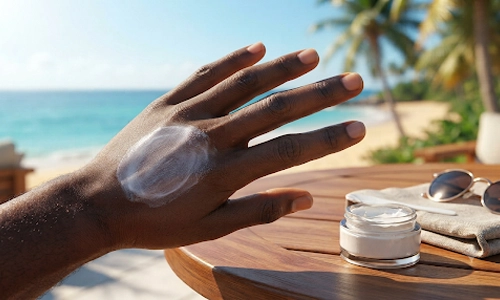

Mineral sunscreens commonly contain zinc oxide and titanium dioxide. These ingredients help protect your skin from ultraviolet radiation but can leave a visible white cast, particularly when the formula isn't tinted. The effect can be more noticeable on deeper skin tones.
Look for a tinted mineral sunscreen or a formula designed to blend more easily into your skin tone. Always maintain broad-spectrum SPF 30 or higher.
2. Applying Too Much Moisturizer
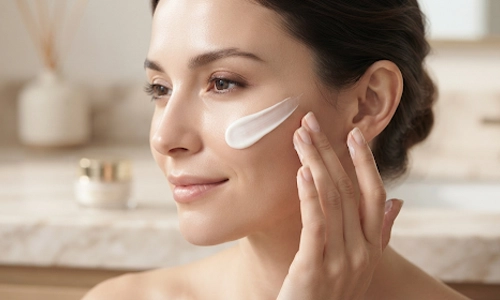
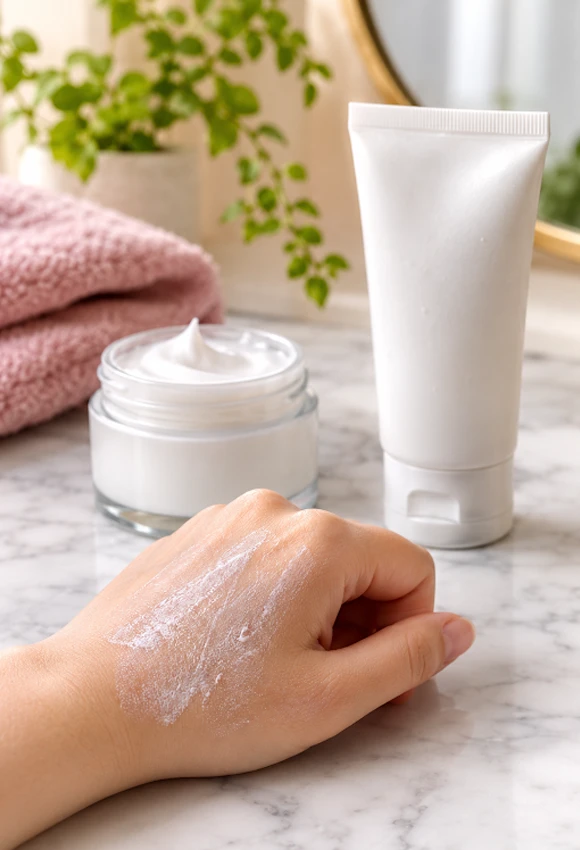
More product doesn't necessarily mean better hydration. Applying a thick layer of moisturizer can leave excess product sitting on the skin's surface. When you rub it repeatedly, the cream may appear white or form visible streaks. Start with a moderate amount and spread it evenly. Add more only if your skin needs it.
3. Skincare Products That Don't Layer Well
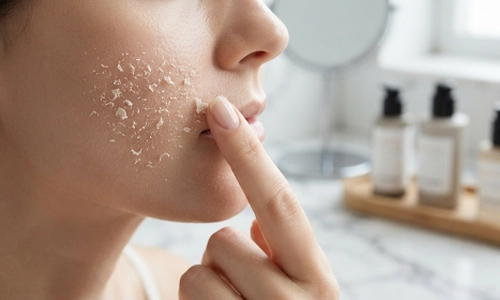
Sometimes, the problem isn't one product but the combination of several. For example, applying a moisturizer, serum, primer, and sunscreen one after another can create a surface film that rolls into tiny flakes when rubbed. This is known as skincare pilling. Simplify your routine, apply thinner layers, and allow each product to settle before applying the next.
4. Rubbing Instead of Applying Gently
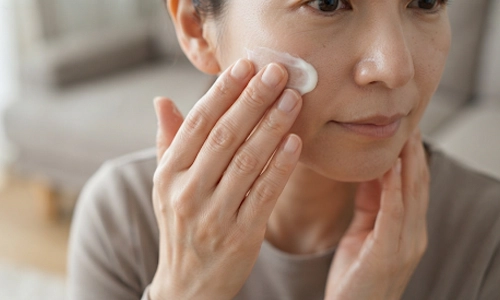
Repeated rubbing creates friction between your hands, skin, and skincare products. This can disturb the product film and make white streaks or small product flakes more visible. Spread creams gently using your fingertips. Avoid repeatedly rubbing an area once the product has been distributed.
Is It White Cast, Product Pilling, or Lotion Soaping?
These three effects can look similar, but they aren't the same.
| What you notice | Possible explanation |
| A visible white film after sunscreen | Mineral sunscreen white cast |
| Small flakes or rolled-up bits | Product pilling |
| Temporary white streaks while rubbing lotion | Lotion soaping effect |
The lotion soaping effect occurs when rubbing certain cream formulations produces temporary whitening. It is associated with the interaction of the emulsion and air during application. Understanding the difference helps you choose the right solution instead of unnecessarily replacing your entire skincare collection.
How Can You Prevent White Residue on Skin?
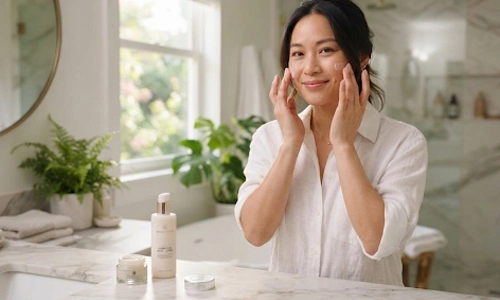
You don't need a complicated 10-step routine to get a smoother finish. Start with these practical adjustments:
- Use thinner layers: Avoid applying excessive amounts of moisturizer, serum, or primer.
- Give products time: Allow each skincare layer to settle before moving to the next.
- Choose compatible textures: Experiment with products that work comfortably together rather than combining too many formulas.
- Apply sunscreen carefully: Use the recommended amount and spread it evenly without excessive rubbing.
- Consider tinted formulas: Tinted mineral sunscreens can help reduce the appearance of a white cast.
- Avoid unnecessary layering: Remove products that aren't essential to your daily routine.
Remember that sunscreen protection matters more than achieving an invisible finish. Don't reduce the recommended sunscreen amount simply to avoid a white cast.
Frequently Asked Questions
1. Why does moisturizer leave white streaks when rubbed in?
It may be related to the formulation, excess product, or friction during application.
2. Does white residue mean my skincare isn't absorbing?
Not necessarily. Some ingredients naturally remain on the skin's surface to perform their intended function.
3. Why does sunscreen leave a white cast?
Mineral sunscreen ingredients such as zinc oxide and titanium dioxide can create a visible white film.
4. How do I stop skincare products from pilling?
Use thinner layers, simplify your routine, and avoid excessive rubbing between applications.
5. Is white residue on skin harmful?
Usually, temporary cosmetic residue isn't harmful. However, irritation or persistent discomfort deserves attention.
6. Should I stop using a product that leaves white streaks?
Not necessarily. First identify whether it's a temporary application effect, white cast, or pilling. Stop using it if it causes irritation.
A flawless skincare finish isn't about applying more products. It's about understanding how your formulas work together.
From choosing the right sunscreen to giving your moisturizer enough time to settle, small changes can make a noticeable difference. So, before replacing your entire beauty shelf, take another look at how you're applying your skincare. Your skin routine should feel effortless, not like another beauty problem to solve.