The Ultimate Muse: Why Korean Traditional Clothing Is Trending
There is a quiet power in clothes that don’t rely on a tight fit to make a statement. If you’ve been watching the evolution of global style lately, you’ll know that korean traditional clothing—the Hanbok—is currently holding the fashion world captive. But this isn't about a sudden social media trend. It’s a collective realization that true elegance lies in volume, grace, and historical depth.
My own perspective on design completely changed during a trip to Seoul last autumn. I was standing in the quiet courtyards of Gyeongbokgung Palace, surrounded by travelers and locals alike wearing these exquisite, rented garments. I decided to try one on myself. The moment I stepped out in those fluid, jewel-toned layers, I understood. The fabric didn't cling; it moved with the wind, creating an incredibly regal, floating silhouette. Experiencing that real-time connection between historical architecture and wearable art made me realize how much our modern, fast-fashion wardrobes are missing.
Let’s unpack why this ancient aesthetic is the ultimate muse for today’s style curators.
What Is Korean Traditional Clothing?
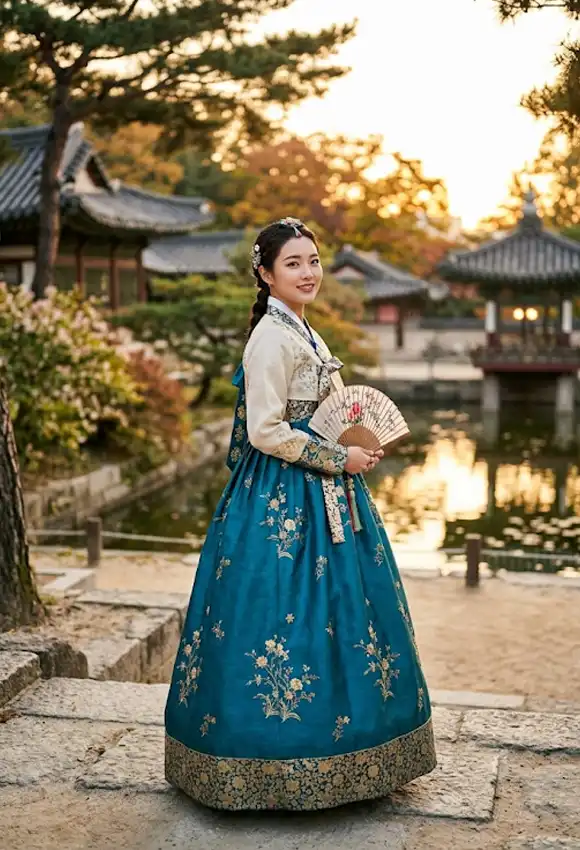
Korean traditional clothing is known as the Hanbok, a centuries-old style of dress recognized for its elegant lines, vibrant colors, and flowing silhouette. Traditionally worn during royal ceremonies, festivals, weddings, and important family celebrations, the Hanbok remains one of Korea's most recognizable cultural symbols. Today, it also inspires modern fashion collections around the world.
Korean traditional clothing is called Hanbok, a graceful style of dress known for its flowing silhouette, vibrant colors, and elegant tailoring. Traditionally worn during ceremonies and celebrations, Hanbok continues to influence modern fashion through its timeless design and cultural significance.
Main Parts of Hanbok
- Jeogori
- Chima
- Baji
- Goreum
- Traditional accessories
The Striking Silhouette of Korean Traditional Clothing
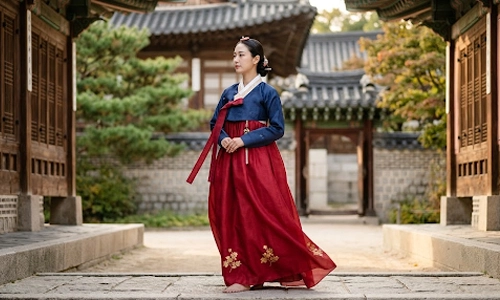
To understand why korean traditional clothing feels so remarkably fresh today, you have to look at its structural genius. Unlike Western garments that are cut to contour the body, traditional Hanbok is patterned using flat, linear shapes. It only takes its true form when a human body steps inside.
The look is defined by three core elements:
- The Jeogori: A beautifully cropped, structured jacket. For women, it sits high above the waist; for men, it extends slightly lower, creating an immediate focal point.
- The Chima & Baji: Women wear the jacket over a high-waisted, sweeping skirt (Chima) that flows out like a canopy. Men wear loose, relaxed trousers (Baji) tied at the ankles for a clean, billowy line.
- The Goreum: The signature asymmetrical fabric ribbon that secures the jacket at the chest, hanging down as a perfect minimalist statement.
In the past, every dye choice and embroidered motif—from royal golds to scholar blues—indicated status. Today, those same design rules are being broken and rewritten.
The History of Hanbok
The Hanbok has evolved over more than 1,600 years, reflecting Korea's changing dynasties, social customs, and artistic traditions. While its silhouette has changed over time, its emphasis on graceful movement and harmonious proportions has remained remarkably consistent.
Modern Hanbok designers continue to reinterpret traditional tailoring using contemporary fabrics and minimalist styling, making the garment relevant to today's fashion landscape.
Why Is Korean Traditional Clothing Trending Again?
Several factors have contributed to the renewed global interest in Hanbok:
- The worldwide popularity of K-pop and K-dramas
- Increased cultural tourism in South Korea
- Fashion designers embracing oversized silhouettes
- Social media photography at Korean palaces
- Growing appreciation for sustainable, timeless fashion
Rather than becoming fashionable overnight, Hanbok has gradually become a global symbol of elegant, heritage-inspired style.
Why the Global Avant-Garde is Taking Notes
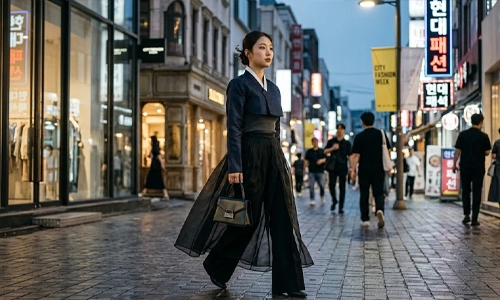
Why is korean traditional clothing rating so highly among top-tier designers right now? Because it defies the predictable. We are seeing major fashion houses and streetwear brands lift these exact proportions for the runway—think sheer, layered maxi skirts over structured pants, and ultra-cropped outerwear paired with relaxed tailoring.
It balances the line between dramatic volume and effortless comfort. When institutions like the Victoria and Albert Museum dedicate major exhibitions to Korean culture, it’s proof that this aesthetic isn't a passing fad. It’s a masterclass in timeless design.
How to Channel the Aesthetic in Everyday Life
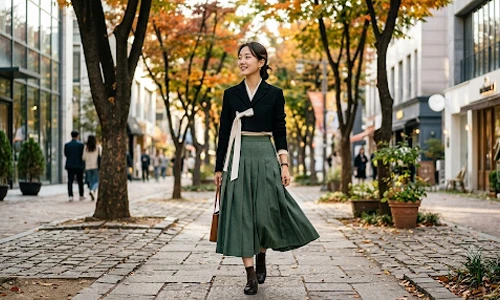
You don’t need to be walking through a palace in Seoul to adopt the philosophy of korean traditional clothing. It’s all about embracing texture and proportion:
- Play with Proportions: Pair a high-waisted, pleated A-line skirt with a very sharp, ultra-cropped blazer to mimic the iconic jeogori and chima balance.
- Focus on Asymmetry: Look for wrap tops, coats, or belts that tie with a single, elongated fabric bow to capture the essence of the goreum.
- Opt for Fluid Fabrics: Choose materials that catch the air when you walk—like linens, organza, or heavy silks—to give your everyday style that distinct, poetic movement.
Cultural Note
Hanbok is more than a fashion statement. It is a cherished symbol of Korean heritage and continues to play an important role in family celebrations, national holidays, and cultural events across South Korea.
This strengthens authenticity and cultural sensitivity.
FAQs
What is the actual name for Korean traditional clothing?
The traditional attire is called Hanbok, which simply translates to "Korean clothing."
What are the main parts of a Hanbok?
It features the Jeogori (a cropped top jacket) paired with either a Chima (a voluminous, high-waisted skirt for women) or Baji (loose, relaxed trousers for men). It's all tied together with a signature fabric ribbon called a Goreum.
Is it okay for foreigners to wear a Hanbok?
Yes, entirely! It is viewed as a wonderful way to appreciate the culture. Plus, if you visit Seoul, entry to the historic palaces is completely free if you are wearing one.
What did the colors mean historically?
Colors equaled status. Royalty and nobility wore vibrant, jewel-toned silks with intricate embroidery. Commoners were generally restricted to wearing plain white or muted tones.
When do people wear it today?
While everyday street style is modern, traditional garments are still worn for major milestones like weddings, first birthdays (Doljanchi), and major holidays like Chuseok.
Why is Hanbok important in Korean culture?
Hanbok represents Korean history, identity, and craftsmanship. Its colors, proportions, and details traditionally reflected social status, values, and cultural traditions.
What fabrics are used in Hanbok?
Traditional Hanbok was commonly made from silk, ramie, hemp, and cotton. Modern versions often use lighter and more practical fabrics.
Can Hanbok be worn casually?
Yes. Modern Hanbok collections are designed for everyday wear and often blend traditional silhouettes with contemporary fashion.
Why do tourists wear Hanbok in Seoul?
Many visitors wear Hanbok while visiting historic sites such as Gyeongbokgung Palace because it offers a cultural experience and often includes free palace admission.
Is Hanbok different for men and women?
Yes. Women's Hanbok typically includes a Jeogori jacket and Chima skirt, while men's Hanbok features a Jeogori with loose Baji trousers.
The Bottom Line
Beautiful design doesn't demand attention; it commands it. By embracing the fluid lines and structural history of korean traditional clothing, you aren't just wearing a trend—you're participating in a masterclass of wearable art.