

Which Wrist Should You Wear a Watch On? Let’s Talk Style
The perfect timepiece can anchor an entire outfit, yet it frequently sparks the same debate: which wrist should you wear a watch on? Traditionalists will argue there is a strict rulebook to follow, but modern styling dictates a much more fluid approach. If your style has felt uninspired or stagnant lately, changing how you frame and wear your daily accessories is the easiest way to reset your aesthetic.
The Traditional Rule: Why Left Has Always Been the "Law"

Traditionally, many people wear a watch on their non-dominant wrist. For a right-handed person, that is often the left wrist; for a left-handed person, it may be the right. The origin of this rule is purely utilitarian. Early watchmakers placed the winding crown on the right side of the case, making it seamless for a right-handed person to adjust the time with their dominant hand.
A left-wrist placement is a common convention, not a mandatory etiquette rule. Standard watches commonly place the crown on the right side of the case, which can make winding or adjusting easier with the right hand while the watch is worn on the left. However, right-wrist wear is equally valid when it feels more comfortable or balances an outfit better.
Furthermore, wearing a mechanical piece on your non-dominant side shields it from daily wear, tear, and accidental scratches while writing or working. It is a practical, safe baseline—but it is no longer the only standard.
Which Wrist Should You Wear a Watch On? The Stylist Rule
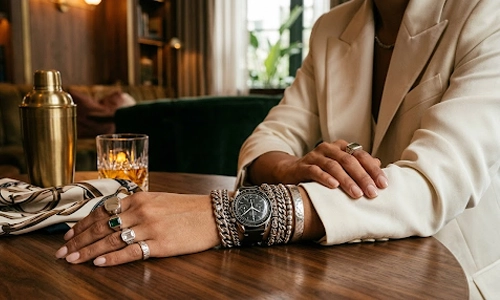
When clients ask how to navigate watch placement, the advice is to look beyond dominant hands and consider comfort, proportion, and jewelry balance.
A few months ago, I was creative directing an editorial shoot where the model was styled with a heavy stack of silver chain bracelets and chunky statement rings on her right hand. Initially, we placed a thick, classic chronograph watch on her left arm out of habit, but the visual weight felt entirely off-balance. The solution? We shifted the watch to the right arm, intentionally mixing it into the bracelet stack, which instantly balanced the silhouette and gave the look a curated, effortless edge. The takeaway is simple: accessories should complement each other, not compete across your body.
Which Wrist Should You Wear a Watch On?
Traditionally, a watch is worn on the non-dominant wrist: usually the left wrist for right-handed people and the right wrist for left-handed people. But modern style has no strict rule.
Wear your watch on the wrist that feels most comfortable, avoids getting in the way of your daily movement, and creates the best balance with your rings, bracelets, and outfit. The right choice is the one that feels intentional.
Where Exactly Should a Watch Sit on Your Wrist?

Nailing the physical placement of the watch is just as crucial as choosing the correct side.
- The Golden Zone: The watch case should rest just above the ulnar styloid process (the prominent wrist bone), sitting flat against the wider part of the forearm.
- The Tension Check: You should be able to slide one finger comfortably under the strap. Any looser, and the watch looks careless; any tighter, and it disrupts the line of your sleeve.
- The Cuff Interaction: A classic dress watch should sit subtly beneath a tailored cuff, revealing itself naturally only when your arm is bent.
Left-Handed vs. Right-Handed: Breaking the Binary

For left-handed individuals, wearing a watch on the right wrist is both a functional necessity and a stylistic signature. To accommodate this, luxury horology has long embraced “Destro” watches generally have the crown on the left side of the case, often helping people who wear a watch on the right wrist. Rolex’s left-crown GMT-Master II is a clear example of this configuration.
However, even right-handed style icons frequently adopt the right-wrist placement purely as a subversive style choice. It immediately breaks visual expectations and signals a deliberate departure from rigid convention.
| Watch Type | Best Styling Approach |
| Minimal dress watch | Wear alone or with one delicate bracelet |
| Chunky chronograph | Keep the other wrist lighter |
| Smartwatch | Choose the wrist that feels most comfortable for daily use |
| Vintage watch | Pair with subtle jewelry and classic tailoring |
| Statement watch | Let the watch be the main accessory on that arm |
Can You Wear a Watch With Bracelets?
Yes. A watch can look stylish with bracelets on the same wrist, especially when the stack uses mixed but coordinated textures. Keep hard metal bracelets slightly separated from a delicate watch case to reduce rubbing and scratches.
Watch Etiquette for Formal Outfits
For formal events, choose a slim watch that can sit neatly beneath a shirt or blazer cuff. Avoid oversized sports watches with black-tie or highly tailored evening outfits unless the dress code is relaxed.
Frequently Asked Questions
Which wrist should you wear a watch on?
Traditionally, you should wear your watch on your non-dominant wrist (the left wrist for right-handed people and the right wrist for lefties). Modern style, however, prioritizes personal comfort and jewelry balance over strict rules.
Can a woman wear a watch on her right hand?
Yes. Modern fashion encourages wearing a watch on whichever hand feels most comfortable or best balances your overall look, regardless of gender or tradition.
Should a watch be tight or loose on the wrist?
It should be snug but comfortable. The ideal fit allows you to slide one index finger flat under the strap without it pinching your skin or sliding down past your wrist bone.
Does it matter if a watch faces inside or outside the wrist?
Most people wear the watch face on the outside of the wrist for easy reading. However, wearing it on the inside is a valid style and functional choice, often preferred by professionals who need to check the time discreetly or protect the crystal from scratches.
Can you wear a watch and a bracelet on the same wrist?
Yes, layering a watch and a bracelet on the same wrist is a great way to create a stylish accessory stack. To avoid scratching your watch, place thinner, fabric, or leather bracelets next to it, or wear the bracelet slightly higher up on your forearm.
Is it wrong to wear a watch on your dominant hand?
No. Wearing a watch on your dominant hand is completely acceptable. Some people find it more comfortable, while others choose it to balance their jewelry or accessories.
Should left-handed people wear watches on the right wrist?
Many left-handed people prefer the right wrist because it keeps the watch away from their writing hand. However, personal comfort matters more than tradition.
Can I wear an Apple Watch on either wrist?
Yes. Apple Watch can be worn on either wrist, provided you adjust the orientation settings and wear the band snugly but comfortably for accurate sensor contact.
Should a watch sit above or below the wrist bone?
For comfort, a watch should generally sit just above the wrist bone rather than directly on it. It should feel stable without pinching or sliding around.
It’s All About Personal Confidence
So, which wrist should you wear a watch on? The ultimate answer comes down to visual harmony and how you move throughout the day. Whether you favor the timeless utility of the left wrist or choose to balance a statement jewelry stack on the right, your placement should feel entirely intentional.